



Introduction to Don Crowder
Don Crowder was a Texas attorney who became widely known for representing Candy Montgomery in one of the most sensational murder trials in Texas history. The 1980 case involved the killing of Betty Gore, a Wylie schoolteacher and acquaintance of Montgomery. Crowder’s defense strategy attracted enormous attention because he acknowledged that Montgomery had killed Gore but argued that she had acted in self-defense.
Decades later, Don Crowder became familiar to a new generation through television dramatizations of the case. His role was portrayed in Hulu’s Candy and later in HBO’s Love & Death. These productions renewed public interest in Crowder, his courtroom strategy, and what happened to him after the famous trial.
Who Was Don Crowder?
Don Crowder was an American lawyer who practiced in Texas. The State Bar of Texas identifies him officially as Alton Don Crowder and records his Texas license date as September 16, 1968. His primary practice location was listed as Allen, Texas, and the state bar now identifies him as deceased.
Although Crowder eventually became associated with one of the region’s most famous criminal trials, he was not primarily known as a criminal defense specialist. Robert Udashen, who later worked with Crowder on the Montgomery case, explained that Crowder practiced civil law and was not a criminal attorney.
This background makes his involvement in the Montgomery case particularly interesting. He entered a nationally discussed murder trial despite having a career that was not centered on criminal defense.
Don Crowder’s Legal Career
Crowder developed a substantial legal career in Collin County, Texas. According to reporting about his career, he became a prominent local attorney and served as city attorney for Allen for approximately 22 years.
His professional reputation existed before the Montgomery trial, but the case transformed his public identity. Before 1980, Crowder was primarily a local lawyer. After the trial, his name became permanently linked with the defense of Candy Montgomery.
The case also demonstrated how courtroom strategy could dramatically affect a highly emotional criminal prosecution. Instead of simply denying that Montgomery was responsible, Crowder eventually chose a much more difficult approach: acknowledge the killing while asking jurors to accept the explanation that it occurred during an extreme confrontation.
Don Crowder and Candy Montgomery
Don Crowder knew Candy Montgomery through their church community. According to an interview with Robert Udashen, Crowder and Montgomery attended the same Methodist church. When Montgomery became concerned that police were investigating her connection to Betty Gore’s death, she contacted Crowder.
Crowder initially advised Montgomery regarding her contact with police. As the investigation increasingly focused on her, he brought in Robert Udashen, who had experience in criminal law. This eventually resulted in a defense team that combined Crowder’s relationship with Montgomery and Udashen’s criminal-defense knowledge.
Their professional partnership became central to one of the most remarkable trials in North Texas.
The Betty Gore Murder Case
Betty Gore was a schoolteacher in Wylie, Texas. On June 13, 1980, she was killed inside her home. Montgomery eventually admitted that she had killed Gore with an ax, but her defense maintained that the killing was an act of self-defense.
The case was complicated by Montgomery’s previous affair with Gore’s husband, Allan Gore. The affair had ended before the killing, but it became a major part of the prosecution and defense narratives. Allan Gore testified during the trial, while Crowder questioned him about the relationship and circumstances surrounding the events.
The prosecution had a straightforward physical fact to establish: Montgomery had killed Gore. Crowder therefore needed to persuade jurors that the circumstances surrounding the killing made it legally justified.
Don Crowder’s Unusual Defense Strategy
One of the most memorable moments of the trial occurred when Crowder shocked prospective jurors by acknowledging that Montgomery had killed Betty Gore.
Before trial, Crowder had maintained Montgomery’s innocence. During his opening statement, however, he revealed that Montgomery would admit to the killing and explain that she acted in self-defense. Contemporary UPI reporting described the admission as a surprise to the courtroom.
This was a major strategic decision.
Rather than spending the entire trial trying to establish that Montgomery had not committed the act, the defense focused on why she had done it. Montgomery’s testimony became essential because she was the only surviving witness to the confrontation.
Crowder’s approach was essentially to ask the jury to understand the event from Montgomery’s perspective rather than viewing the killing only through the number of injuries inflicted.
The Self-Defense Argument
The central argument was that Betty Gore confronted Montgomery and that the confrontation escalated into violence. Montgomery testified that Gore initially attacked her with an ax. Montgomery claimed that she gained control of the weapon during the struggle and used it to defend herself.
The defense had to overcome an obvious difficulty: Gore had suffered 41 blows from an ax.
Crowder therefore worked to demonstrate that the killing was not a carefully planned murder. During testimony, he questioned investigators about the scene and pointed out details that could support the argument that Montgomery had not arrived with a calculated plan to kill Gore.
The defense also presented psychological evidence intended to explain Montgomery’s reaction during the confrontation.
Don Crowder in the 1980 Trial
The trial took place in McKinney, Texas, in October 1980 and lasted eight days. Crowder’s courtroom performance became an important part of the case. At one point during the proceedings, he was jailed briefly for contempt after a dispute with the judge. He was subsequently released after legal intervention.
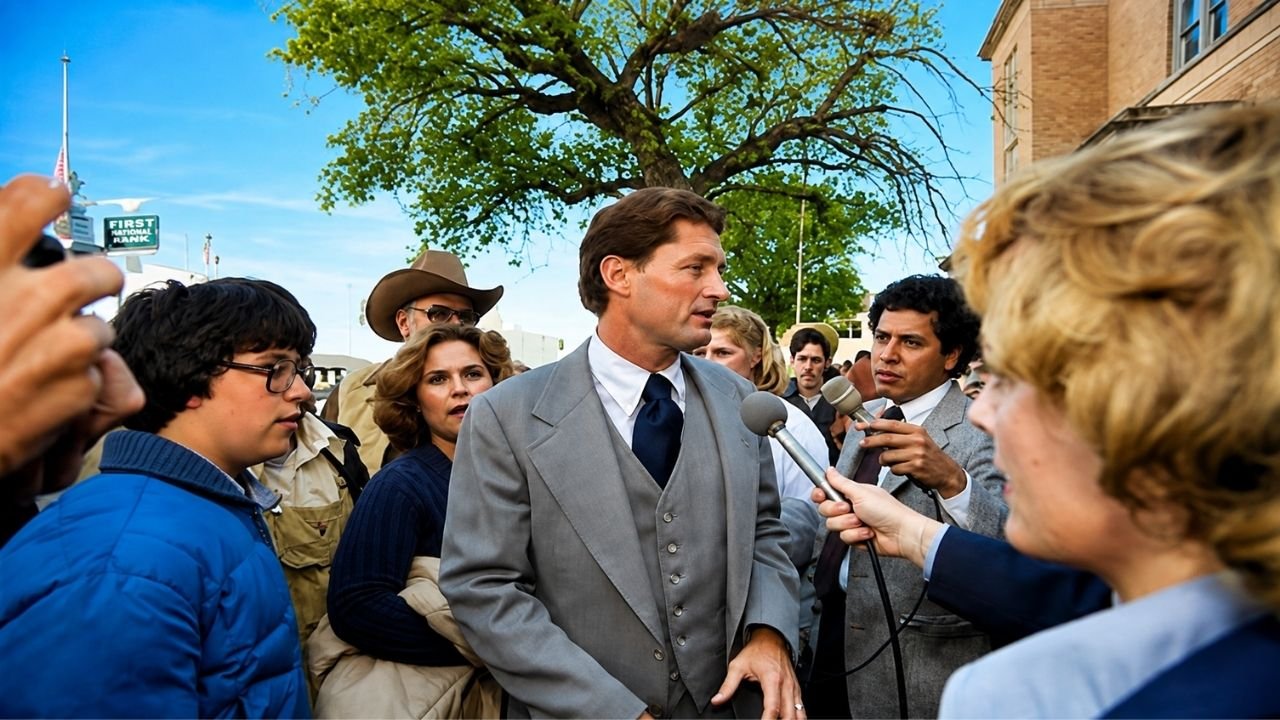
The trial attracted significant public attention. Crowds and journalists followed the proceedings, and the courthouse had to accommodate the unusual level of interest.
Crowder continued presenting the defense case even under intense scrutiny. His questioning focused on the circumstances of the confrontation, the absence of clear evidence of premeditation, and Montgomery’s account of what happened.
The Verdict and Don Crowder’s Success
On October 29, 1980, the jury found Candy Montgomery not guilty. Contemporary reports described the verdict as the conclusion of an intensely followed trial in which the defense had successfully argued self-defense.
The result made Don Crowder one of the most talked-about lawyers in the region.
From a legal perspective, the verdict was significant because the defense did not deny that Montgomery had killed Gore. Instead, it persuaded the jury that the prosecution had not established murder in the circumstances presented.
The case remains controversial, but the verdict itself became one of the defining moments of Crowder’s career.
What Happened to Don Crowder After the Trial?
Crowder continued his legal career after the Montgomery trial and remained an important figure in Collin County. He served as Allen’s city attorney for many years and was involved in local political life.
His career also included a political campaign for governor of Texas in 1986. Later accounts indicate that the Montgomery trial remained an important and complex part of his view of his professional life.
The trial brought him fame, but it also produced strong reactions. The acquittal was controversial in the community, and Crowder reportedly experienced social and personal consequences after the case.
Don Crowder’s Personal Struggles
The years following the Montgomery trial were difficult for Crowder. Later reporting has described significant personal struggles, including problems with substance abuse and the emotional impact of events in his life.
Crowder’s death in 1998 is another important part of his biography. The State Bar of Texas confirms that he is deceased, while later reporting identifies November 10, 1998, as the date of his death.
Because some accounts differ in their descriptions of his private struggles, responsible biographies should avoid presenting every later claim as a fact. What can be said confidently is that Crowder’s life after the Montgomery trial was considerably more complicated than his courtroom victory might suggest.
Don Crowder and Love & Death
Interest in Don Crowder returned decades after his death when the Candy Montgomery story was dramatized for television.
In HBO’s Love & Death, actor Tom Pelphrey portrays Don Crowder. The series dramatizes the relationship between Montgomery and Allan Gore, the killing of Betty Gore, and the subsequent criminal trial.
The television version of Crowder should not be treated as a complete historical biography. Scripted productions combine documented events with dramatic storytelling, and some scenes are constructed for entertainment.
Still, the series helped introduce Crowder’s name to viewers who had never heard about the original 1980 trial.
Don Crowder in Other Television Adaptations
The Crowder character also appeared in Hulu’s Candy, another dramatization of the same real-life case. In that production, actor Raúl Esparza portrayed Crowder. Later reporting about the two adaptations identifies both actors as portraying Montgomery’s defense lawyer.
The repeated appearance of Crowder in dramatizations shows how important his courtroom role was to the story. The defense attorney was not merely a background figure; his strategy helped shape the narrative of the trial.
Real Don Crowder vs. the TV Character
It is important to separate the historical Don Crowder from his fictionalized television portrayals.
The real Crowder was a Texas attorney with a long professional career. Official State Bar records establish his legal credentials and licensing history.
Television productions, on the other hand, must compress years of events into a limited number of episodes. Characters may be given additional dialogue, dramatic conflicts, or scenes that are not directly documented in historical records.
For readers researching Don Crowder, primary and contemporary sources should therefore take priority over television scenes.
Why Don Crowder Remains Famous
Don Crowder remains memorable for several reasons. First, he represented a defendant in a murder case that generated extraordinary public attention. Second, his defense strategy was unusual because he openly acknowledged the killing while arguing self-defense. Third, the case produced a not-guilty verdict despite the extremely violent circumstances of the death.
Finally, the story has continued to receive attention through books, documentaries, news reports, and scripted television series.
For modern audiences, Crowder’s name is often encountered alongside Candy Montgomery, Betty Gore, Allan Gore, and Love & Death. His legal career therefore remains closely connected to one of the most recognizable true-crime cases from 1980s Texas.
Frequently Asked Questions About Don Crowder
Who was Don Crowder?
Don Crowder was a Texas attorney best known for defending Candy Montgomery in the 1980 murder trial involving Betty Gore. The State Bar of Texas lists him officially as Alton Don Crowder.
What was Don Crowder known for?
He became famous for defending Candy Montgomery and successfully presenting a self-defense argument that resulted in her acquittal.
Did Don Crowder know Candy Montgomery?
Yes. According to Robert Udashen, Crowder knew Montgomery through their Methodist church community.
Was Don Crowder a criminal lawyer?
Crowder was primarily a civil lawyer rather than a criminal-defense specialist. Robert Udashen became involved because of his experience in criminal law.
Who played Don Crowder in Love & Death?
Tom Pelphrey portrayed Don Crowder in HBO’s Love & Death.
Conclusion
Don Crowder’s life and career are closely connected to one of the most unusual criminal trials in Texas history. Although he was a successful Texas lawyer before the case, his defense of Candy Montgomery transformed him into a nationally recognized figure.